The Incredible Evolution of Computers



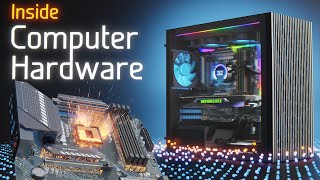


The Incredible Evolution of Computers with tags history of computers, computer history, evolution of the computer timeline, evolution of the computer, evolution of computers, computer generations, early computers, first computers, timeline of technology, history of computing devices, history of programming, alan turing, ada lovelace, computer evolution, charles babbage, computer timeline, history of computers crash course, history of computing, mainframe, ibm, cpu, history of integrated circuits, integrated circuits
Computers used to be huge, taking up an entire room, yet modern smartphones that fit in your pocket are millions of times more powerful than those room‑sized mainframes. So how did we get from heavy, slow computers to incredibly powerful smartphones? Well, in this video, we’ll explore the evolution of computers over the past 80 years and also look ahead to the future of computing and AI processors. Throughout the video, we’ll focus not just on transistor counts and Moore’s law, but on the fundamental technological shifts between generations of computers. So stick around and let's explore the Evolution of Computers!
Table of Contents for The Evolution of Computers
00:00 - The Evolution of Computers 1945-2026
00:57 - Computer Disassembly
02:05 - Much more than Moore's Law
03:30 - The 8 Ages of Computer Evolution
05:12 - Dozens of Zeroes of Processing Power
06:27 - Age 1: Transistorization
08:44 - Age 1: The First Transistorized Computers
09:45 - The Evolution of Computer Memory
11:11 - Brilliant Sponsorship
12:58 - Age 2: Packaging Transistors
15:41 - Age 2: Why are Mainframes So Big?
19:42 - Age 2: The beginning of the Integrated Circuit
22:57 - Age 2: The First CPU
25:30 - How do technology leaders fall behind?
29:55 - Age 3: The Frequency Rage
30:29 - Behind the Scenes
31:51 - The 8 Ages of The Evolution of Computers
33:03 - Thank You to Our Supporters
If you want to support our production of the next episodes on the Evolution of Computers,
Primary Animator and Director: Adrei Dulay
Secondary Animators: Parvesh Khatri, Sahil Khatri
Research, Script and Editing: Teddy Tablante
Twitter: @teddytablante
Modeling: Prakash Kakadiya & Adrei Dulay
Image and Thumbnail Editing: Adrei Dulay & Sahil Khatri
Voice Over: Phil Lee
Sound Design by Drilu: www.drilu.studio
Sound Design and Mix: Luis Huesca
Erratum:
Attribution:
Photo Attribution in Order of Appearance
Harvard Mark 1 | Computer. Public Domain. Wikimedia Commons
Colossus Mark 1 | Computer. Bletchley Park. Farai Gandiya. Wikimedia Commons
The Z3 | Computer. Deutsches Museum, Munich. Venusianer. Wikimedia Commons
"Victory"|Computer. Public Domain. Wikimedia Commons
1st-Transistor. Unitronic. Wikimedia Commons
RCA 501| Mainframe. RCA Corporation. Via Computer History Museum
IBM 7090| Mainframe. NASA. Wikimedia Commons
NEAC 2203 | Computer. Statistics Bureau, Japan. NEC. Wikimedia Commons
Mercury Delay-Line Store of the Univac I Computer. Deutsches Museum, Munich. Tiia Monto. Wikimedia Commons
Williams-Kilburn Tube. Manchester Mark I. ArnoldReinhold. Wikimedia Commons
Left to Right
IBM System 360 Model 30| Mainframe. Computer History Museum. ArnoldReinhold. Wikimedia Commons
IBM System 360 Model 75|Mainframe. University of Waterloo Archives. Wikimedia Commons
IBM System 360 Model 91| Mainframe. Public Domain. Wikimedia Commons
IBM System 360 Model 20 | Mainframe. Oslo Museum. Ørnelund, Leif. Wikimedia Commons
IBM System 360 Model 25| Mainframe. Vienna. JonnyBrazil. Wikimedia Commons
IBM System 360 Model 40| Mainframe. Kyoto-Day9. Wikimedia Commons
IBM System 360 Model 44| Mainframe. Living Computers: Museum+Labs. Wikimedia Commons
IBM System 360 Model 50| Mainframe. Sandstein. Wikimedia Commons
IBM System 360 Model 65| Mainframe. Living Computers: Museum+Labs. Wikimedia Commons
IBM System 360 Model 67| Mainframe. Public Domain. Wikimedia Commons
IBM System 360 Model 85|Mainframe. Public Domain. Wikimedia Commons
IBM System 360 Model 195| Mainframe. German Federal Archive. Wikimedia Commons
SMIL Drum Memory|Memory. Nixdorf. Wikimedia Commons
Apollo Guidance Computer NOR-gate die| IC. Public Domain. Wikimedia Commons
Apollo Guidance Computer| Computer. Steve Jurvetson. Flickr
the 74181 TTL 4 bits ALU schematics. Stéphane Tsacas. Wikimedia Commons
Altair 8800 | Computer. California. Michael Holley. Wikimedia Commons
Sphere 1 | Personal Computer. Ben Zotto. Wikimedia Commons
TRS-80 Model 1 | Personal Computer. Prolete. Wikimedia Commons
TRS-80 Model 1 | Personal Computer. Prolete. Wikimedia Commons
United States v. International Business Machines Corp.
“I.B.M. Antitrust Suit Opens With U.S. Seeking Break‐Up.”
New York Times, May 20, 1975, Business & Finance, 53.
#Computers #HistoryofComputers #HowItWorks