Assistant's Kitchen Science Experiments: Eggs, Milk and Vinegar Surprises




Assistant's Kitchen Science Experiments: Eggs, Milk and Vinegar Surprises with tags theengineeringfamily, family fun, family fun for everyone, assistant, assistant video, kids videos, family video, science experiments for kids, kids science, dissolving eggshell experiment, milk and soap experiment, orange peel experiment, science experiments at home, hands on science for kids, stem for kids, educational videos for kids, family science experiments, science project ideas, asstnt, girls in science, assistant science experiments, theengineeringfamily science
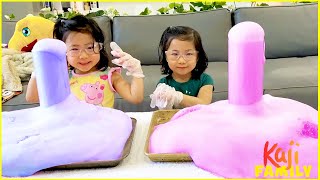
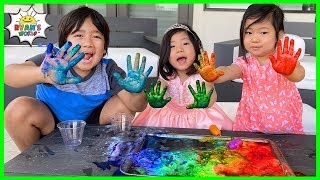
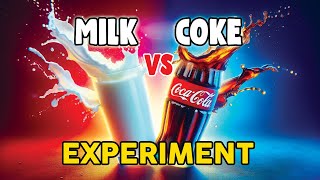
The Assistants conduct three engaging science experiments centered around eggs, vinegar, and milk. They begin by exploring the effects of vinegar and pickle juice on eggshells, demonstrating how vinegar dissolves the shell while pickle juice has a minimal effect. The Assistant then creates colorful milk art using food coloring and soap, showcasing the interaction between the soap and milk fat. After waiting a few days, they reveal the results of their egg experiments, noting the differences in eggshell dissolution and the unique textures of the eggs. The episode concludes with a fun comparison of the eggs' reactions and encourages viewers to try these experiments at home.
Outline of the video!
0:14 – Intro: Simple science experiments through testing & observation
1:56 – Chemical Reaction: Eggshell (calcium carbonate) + vinegar → bubbles & CO2
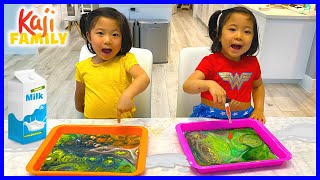
3:37 – Surface Tension: Milk, food coloring & soap swirl experiment
6:08 – Reviewing the Egg Jars: Comparing bubbling & floating results
6:50 – Buoyancy & Density: Orange peel experiment (peel = natural life jacket)
7:59 – 2-Day Follow Up: Comparing eggshell breakdown across different liquids
11:16 – Egg Anatomy: Shell vs. membrane — what holds the egg together
12:02 – Neutralization: How antacid tablets neutralize vinegar
13:22 – Partial vs. Full Reaction: Why some shells only partly dissolved
15:36 – Acidity Check: Why pickle juice affects eggshells like vinegar
17:06 – Final Comparison: Which eggs dissolved fully, partially, or not at all
The Assistant demonstrates simple experiments with everyday materials—eggs, vinegar, pickle juice, milk, food coloring, soap, and an orange—and repeatedly explains what is happening and why. The core learning themes include:
Chemical reactions: the video explains that eggshells contain calcium carbonate and shows how vinegar reacts with the shell, producing bubbles and dissolving it over time.
Cause and effect: children can see how changing one ingredient or liquid changes the experiment outcome.
Observation and comparison: the hosts compare eggs in vinegar, antacid-treated vinegar, and pickle juice, helping viewers notice differences and draw conclusions.
Basic physics/buoyancy: the orange experiment teaches why an orange floats with the peel and sinks without it.
Simple food science / surface interaction: the milk, food coloring, and soap segment demonstrates how soap affects the milk mixture and creates movement.
Scientific curiosity: the format encourages kids to ask questions, observe changes over time, and learn by testing.
Why it appears to meet YouTube-style expectations for high-quality kids’ content
Based on the available video metadata and summary, this video appears consistent with many common markers of high-quality children’s educational content:
Strong educational intent
The video’s primary purpose is teaching science concepts through demonstrations, not shock value, misleading behavior, or repetitive low-value content.
Clear learning structure
The content has an introduction, experiment setup, explanation, observation period, review of results, and conclusion. That structure supports comprehension and retention for young viewers.
Age-appropriate presentation
The visuals are colorful, engaging, and family-oriented, and the host presents the material in a simple, accessible way suitable for children.
Hands-on learning
The experiments use common household items and encourage curiosity and exploration, which is a strong indicator of meaningful educational value.
Explanatory narration
The hosts do not just show the experiments—they explain concepts like carbon dioxide formation, shell dissolution, membrane survival, neutralization, and buoyancy.
Consistent educational genre signals
The metadata explicitly labels the genre as Educational, and the visual/speech keywords strongly center on science experiments and hands-on learning.
About The Engineering Family
We are The Engineering Family, a family of educators working to show you how to make learning fun and engaging through toy unboxings, toy reviews, and original series designed to give insight into imaginative play within your family. With Mr. Engineer as an experienced engineer with a love of exploring new things, Mrs. Engineer an award-winning teacher with a math and counseling focus, and their daughter The Assistant you can think of The Engineering channel as your imagination station. You can think of The Engineering Family channel as a Funbrain meets YouTube. We aim to integrate fun entertainment while sprinkling education and important life lessons! We often feature Paw Patrol, PJ Masks, Big Billy, our silly dogs Wiggles and Waggles, the Silly Mechanic, and more! As always... TheEngineeringFamily only features 100% suitable family fun entertainment. #Familyfun #Familyfunforeveryone #Theengineeringfamily